

International Health Council
A New Model for
International Health Cooperation
The International Health Council (IHC) is the model we propose to replace the World Health Organization (WHO).
In 2026, the Board of Fellows at the Action on World Health Foundation commissioned Professor Carl Heneghan and Dr Tom Jefferson from the Centre for Evidence-Based Medicine at the University of Oxford to produce a report on how best to reorganise international health collaboration.
Their groundreaking Global Health Assessment and Recommendations Report has provided us with the template for a new international health advisory body that is appropriate for the challenges facing all health care systems.
The IHC is designed to empower Member States scientifically, rather than to make them institutionally subordinate. Countries with significant scientific capacity can share their expertise and infrastructure for collaborative international projects. Meanwhile, countries with fewer resources can leverage these shared capabilities while also focusing on their own development.
The IHC Mission
To strengthen health through independent scientific cooperation between sovereign states, providing cross-border health protection and producing trusted scientific evidence and resources for the benefit of all Member States.
IHC Report
IHC Brochure
Two principal domains
The IHC would concentrate its work within two principal domains: Cross-Border Health Protection and International Scientific Resources.
The purpose of the IHC is to undertake scientific work in which cooperation between states can produce greater value, efficiency, or reliability than unnecessary duplication by individual countries.
National sovereignty
Decisions about regulation, reimbursement, legislation, expenditure and public policy would remain with national authorities. The IHC is also clear that individual patients and clinicians must make individual clinical decisions.
The IHC would not legislate for Member States, regulate national health systems or compel implementation of its recommendations.
IHC vs. the WHO
Remit, financing, governance and scientific authority. Select a subject to compare the two institutions.
The WHO
Purpose
WHO continues to operate under an exceptionally broad constitutional mandate.
The IHC
Purpose
The IHC would have only the functions explicitly granted to it by treaty.
The WHO
Legal authority
Conventions, agreements and regulations through the processes established by its Constitution.
The IHC
Legal authority
No legislative, treaty-making or regulatory authority over Member States.
The WHO
Domestic decisions
Member States retain domestic authority; obligations depend on applicable instruments of international law.
The IHC
Domestic decisions
Scientific assessments, guidelines and technology appraisals would be advisory; national authorities retain decisions.
The WHO
Financing Sources
WHO receives funding from Member States and non-state actors, such as Foundations and private companies.
The IHC
Financing Sources
The IHC would be funded solely through collectively determined Member-State contributions.
The WHO
Financing Streams
WHO receives two principal types of funding: assessed contributions and voluntary contributions.
The IHC
Financing Streams
Individual Member States would not be allowed to earmark their collectively determined Member-State funding for specific programmes.
The WHO
Governance
Member-State governance through the World Health Assembly and Executive Board.
The IHC
Governance
Member States would govern the IHC through a Governing Council operating on the principle of sovereign equality. Governance authority and scientific authority would be separated.
The WHO
Scientific work
Disease surveillance, technical standards, scientific coordination and support for Member States.
The IHC
Scientific work
Cross-border surveillance and permanent international evidence capability across communicable and noncommunicable diseases.
The WHO
Political and policy functions
Its scientific, normative, advisory and political functions coexist within the same institutional structure.
The IHC
Political and policy functions
The IHC would not function as a political campaigning organisation. The scientific relevance of these subjects would not confer policy jurisdiction upon the IHC.
The WHO
Emergencies
Emergency coordination and recommendations within existing international legal frameworks.
The IHC
Emergencies
Accelerated authorised scientific functions without additional authority over Member States.
The WHO
Oversight
Existing audit, evaluation, ethics and oversight arrangements.
The IHC
Oversight
Separate Ethics Commissioner, Inspector General, Independent Auditor and Scientific Ombudsman; protected good-faith dissent.
The WHO
Organisation
Headquarters, regional and country structures.
The IHC
Organisation
Small permanent Secretariat relying substantially on distributed scientific expertise.
The WHO
Measuring Success
Broad constitutional health objectives and institutional programmes.
The IHC
Measuring Success
Scientific quality, timeliness, transparency, independence, Member-State usefulness, Treaty compliance and efficiency.
IHC Summary
Six key recommendations
01 · Two core scientific domains
Member States should consider establishing an IHC centred upon Cross-Border Health Protection and International Scientific Resources, providing permanent international scientific capability across both communicable and noncommunicable disease.
02 · Clear Treaty limits from the outset
The founding treaty should expressly incorporate conferred functions, subsidiarity, national sovereignty, explicit exclusions and the Treaty Remit and Subsidiarity Test. Scientific competence should not confer legislative, regulatory or executive authority.
03 · Scientific independence as a structural requirement
Scientific assessment should be separated from political governance and protected through transparent methods, evidence standards, disclosure and management of conflicts, publication of uncertainty and scientific disagreement, independent oversight and protection for good-faith scientific dissent.
04 · Collective Member-State financing
Core functions should be financed by collectively determined Member-State funding. Non-state organisations could contribute evidence and expertise under rigorous disclosure, conflict-of-interest and submission procedures, but should not finance Treaty-defined functions or determine scientific priorities.
05 · Progressive establishment
The first year should establish governance, oversight, financing and the Scientific Operating Framework. Core capabilities should then be introduced and tested progressively across both scientific domains.
06 · Continuing Treaty compliance and independent evaluation
All major activities should remain subject to the Treaty Remit and Subsidiarity Test and periodic review. A comprehensive independent evaluation after five years should assess scientific performance, usefulness, financial and political independence, Treaty compliance, organisational size and evidence of mission creep before substantial further expansion.
International health cooperation should be scientifically strong, limited by its Treaty Articles, financially independent and accountable to the sovereign states it exists to serve.
International Health Council: Global Health Assessment and Recommendations Report
IHC In Depth
Choose a topic from below to explore how the IHC would work.
01The Case for Change
The problems with the WHO and why repeated reform may not be sufficient.
02Mission and Remit
The IHC’s purpose, its two scientific domains and its service to sovereign Member States.
03Science
Scientific functions, evidence standards, operating methods and continuous review.
04Sovereignty
National decision-making, individual autonomy and the Treaty Remit and Subsidiarity Test.
05Governance
Sovereign equality, Member-State financing, scientific independence and oversight.
06The Ten-Year Vision
A deliberate establishment programme, independent evaluation and a different measure of success.
07Consultation
Contribute evidence, comments and recommendations.
Welcoming the Proposals
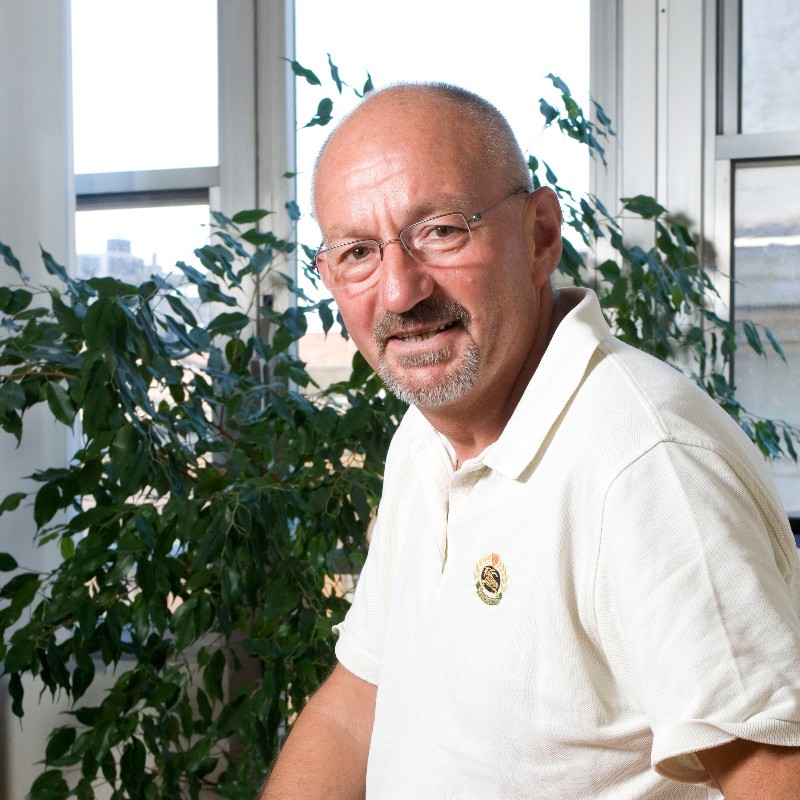
Professor Karol Sikora
Chairman of the Board of Fellows
Action on World Health Foundation
Here we have an amazing plan for discussion, consultation and implementation. The proposed International Health Council is a futuristic glimpse of what’s really needed now to improve world health.
Read Karol’s foreword
Living long and well in good health is a ubiquitous human goal. Modern medicine has delivered unprecedented health gains to rich and poor alike. Most once lethal infectious diseases can now be cured and prevented. Remarkable scientific advances have dramatically improved survival from cancer and heart attacks. But the costs of optimal care have soared.
The biggest health gains within our reach come from the judicious application of what we already know in an economically sustainable manner. This alone provides a clear need for a widely recognised, overarching health advisory body skilled at the analysis of the economics of health gain and the evidence behind it. Most agree the WHO is no longer fit for this purpose. But what should replace it?
In 2026, the Board of Fellows at the Action on World Health Foundation commissioned Professor Carl Heneghan and Dr Tom Jefferson from the Centre for Evidence-Based Medicine at the University of Oxford to produce a report on how best to reorganise international health collaboration.
Their report provides an excellent starting point to build a realistic plan for a new international health advisory body appropriate for the challenges facing all health care systems.
As a practising oncologist and former Chief of the WHO Cancer Programme, the report resonates with my experience. The Organisation simply has too little medical knowledge and instead plays politics through an unmanageable structure. In a highly interconnected world, leading expertise is naturally diffuse. We need to harness it directly from the front, wherever that may be. Concentrating it into a massive bureaucracy simply makes no sense.
Here we have an amazing plan for discussion, consultation and implementation. The proposed International Health Council is a futuristic glimpse of what’s really needed now to improve world health. For the sake of all our futures we need to move forward quickly on this very credible proposal.

Continue exploring the IHC
The Case for Change
Start with the structural problems our proposal intends to address.